Blue Whale (Balaenoptera musculus)
The Blue Whale or its scientific name, (Balaenoptera musculus), is the largest animal on earth. The Blue whale can grow up to 100 feet in length and weigh nearly 200 tons. Underwater the Blue Whale oaks true blue but as it surfaces it looks like a blue/grey color. Their underbellies have a yellow hue which is caused by the millions of microorganisms that take up residence in their skin. Their diet is composed of consuming krill which are tiny shrimp like animals. The whale can consume almost 4 tons of krill a day. The Blue whales have fringed plates, called baleen, attached to their upper jaws. When the whale gulps a massive mouth full of water and krill the whales massive tongue forces the water out through the baleen plates only leaving the krill behind.
Blue whales live all over the world and can swim in small groups but usually are seen in a pair or even y themselves. They swim about 5 miles per hour but can accelerate if needed close to 20 miles per hour. Being the largest animal on the planet they are also one of the loudest. They create pulses and moans to communicate with each other and it is said they can hear each other from up to a 1000 miles away.
The Blue Whale Calves are carried in the mothers belly for nearly a year. At birth they come out at nearly 25 feet long and weighing up to 3 tons. It consumes its mother’s milk every day for the first year gaining almost 200 pounds a day. With an estimated average lifespan at around 80 to 90 years old scientists have discovered that the oldest Blue Whale found is around 110 years old.
Gray Whale (Eschrichtius robustus)
The Gray whale, Eschrichtius robustus, is almost always covered with parasites all over their back and snouts making it look like white ocean rock. The Gray Whale can grow up to 50 feet in length and weigh up to 40 tons. The whale searches the ocean floor for tiny creatures using its snout to forage and silos get the creatures. It then filters the creatures with its plate of strainers in its upper jaw. The Gray whale is one of the animal kingdoms great migratory, traveling in its pods for almost 13000 mile long trips. Traveling from Alaska all the way to the Mexican Coast where they mate and give birth. Nearly 20,000 whales migrate past Dana Point.
Fin Whale (Balaenoptera physalus)
Fin whales, Balaenoptera physalus, are the second largest baleen whale measuring up to 80 feet in length. They have two colorings on their jaw with gray or black on one side and white on the other. They fin whale is very fast and eats small fish. They circle the schools of fish using the white side of their face scaring the fish into smaller schools making it easier for the whale to catch its prey.
Minke Whale (Balaenoptera acutorostrata)
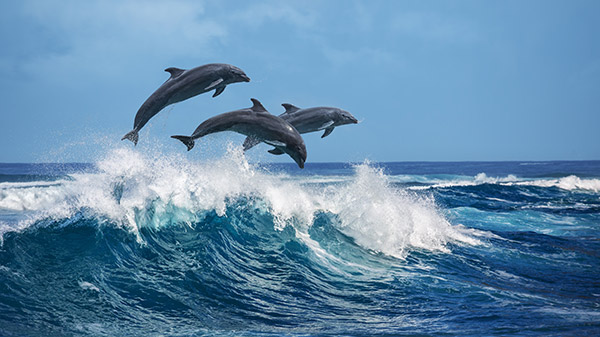
Minke Whales, Balaenoptera acutorostrata, are the smallest baleen whale that we see in our ocean. Growing up to 30 feet in length they are sometimes mistaken as a dolphin. They have a black color to them with a curved dorsal fin.
Humpback Whale (Megaptera novaeangliae)M
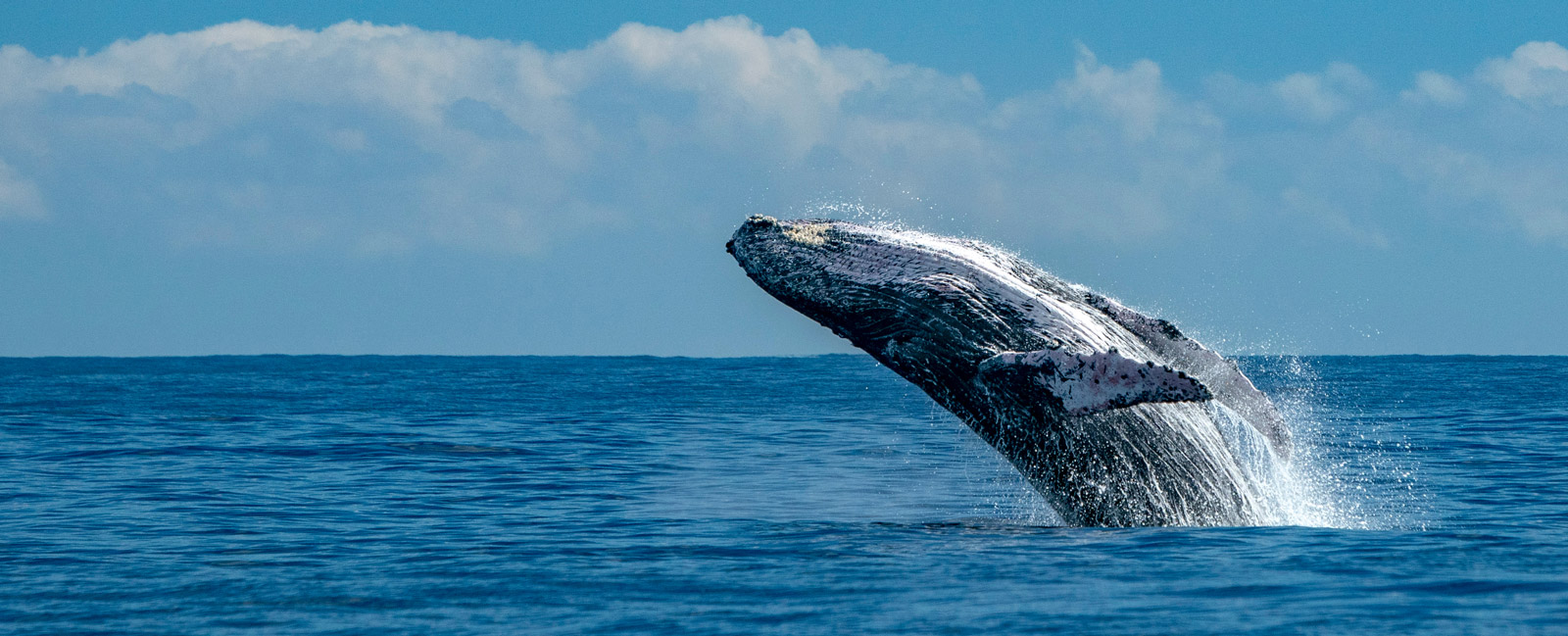
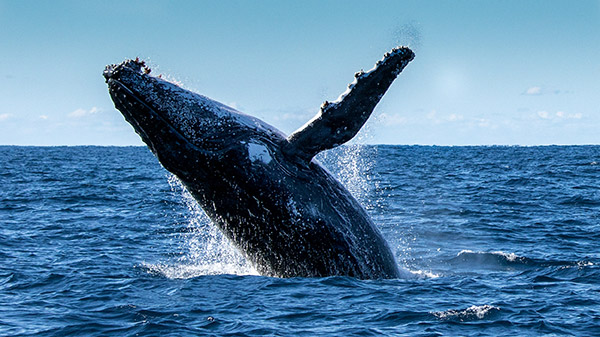
Humpback Whales, Megaptera novaeangliae, are known for its magical songs and noises it makes which travel long distances in the water to each other. These howls and cries can continue for hours communicating with each other and attracting potential mates. The Humpback grows up to about 63 feet in length and weighing up to 40 tons. They feed off of krill, plankton, and small fish. Humpbacks migrate annually from summer feeding grounds near the poles to winter breeding grounds near the equator. When a mother gives birth to her calve they are seen swimming side by side almost always touching. The females will nurse their calves for almost a year though it takes longer for the humpback to reach full adulthood, growing until they are ten years old. Humpbacks are also known for being a powerful swimmer and breaching completely out of the water.
Killer Whale (Orcinus orca)
Orca (Killer Whale), Orcinus orca, is most commonly known as “Shamu” or the show whales seen at SeaWorld. These are one of the most amazing whales to see in the wild rather than in captivity. They can grow up to 32 feet long and weigh up to 6 tons. Living up to 60 years of age, these are the largest of the dolphins and one of the world’s most powerful predators. Their diet consists of hunting and consuming marine mammals such as seals, sea lions and even small whales. Though these are usually found in colder water such as the arctic we do see them off our coast from time to time. Hunting in pods of up to 40 orcas they are very good at working together to hunt their prey.
Sperm Whale (Physeter macrocephalus)
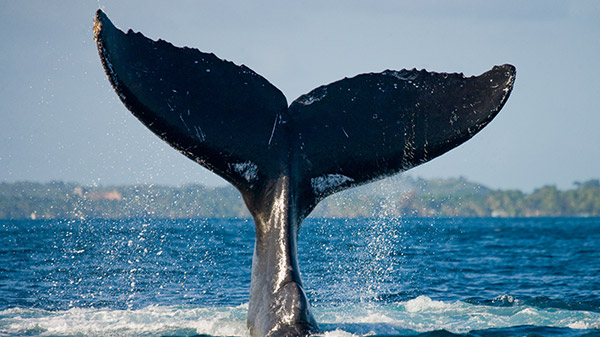
The Sperm Whale, Physeter macrocephalus, can grow up to 59 feet in length and weigh up to 45 tons. “Sperm whales’ heads are filled with a mysterious substance called spermaceti. Scientists have yet to understand its function, but believe it may help the animal regulate its buoyancy.” (National Geographic) The Sperm Whale is known for the long and deep dives in search of squid which is its primary food source. The Sperm Whale can dive down almost 3200 feet deep and hold there breathe for up to 90 minutes before resurfacing. They usually travel in pods with 15 to 20 other Sperm Whales. They migrate close to the equator to give birth and with a huge fluke (tail) stretching 16 feet from tip to tip they can travel 23 miles per hour.
Short-Finned Pilot Whales (Globicephala macrorhynchus)
Pilot Whales are members of the dolphin family and there scientific name is, Globicephala macrorhynchus. They can grow up to 20 feet in length and weigh up to 2200 pounds. Their diet consists of consuming squid and other small fish. They can dive down thousands of feet in search of squid.